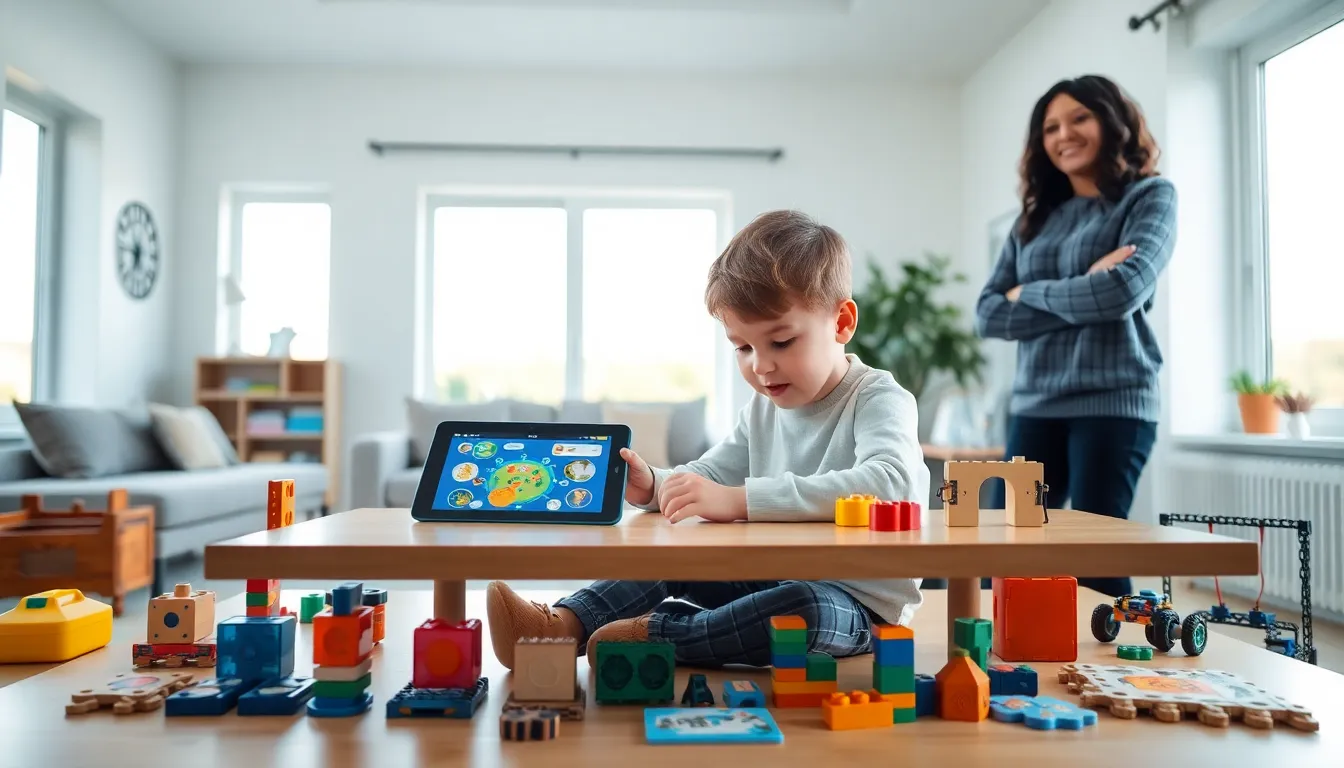
Educational apps and toys have become essential tools for modern child development. Parents today face an overwhelming selection of learning products, from tablet-based games to building blocks with coding features. The right choices can spark curiosity, build problem-solving skills, and make learning genuinely fun. The wrong ones? They collect dust or frustrate kids within minutes.
This guide breaks down what makes educational apps and toys effective, which categories deserve attention, and how to strike a healthy balance between screens and hands-on play. Whether shopping for a toddler or a tech-savvy ten-year-old, these insights will help parents make smarter decisions.
Table of Contents
ToggleKey Takeaways
- Educational apps and toys are most effective when they encourage active participation, offer appropriate challenges, and connect learning to real-world applications.
- Top educational toy categories include building sets, STEM kits, puzzles, art supplies, and pretend play—all promoting open-ended, flexible learning.
- Quality educational apps should feature adaptive difficulty, require active problem-solving, and match your child’s specific interests and developmental needs.
- Screen time works best as a supplement to hands-on play, not a replacement—combine app sessions with related physical activities for reinforced learning.
- Always test educational apps together with your child first and check independent reviews to avoid flashy distractions disguised as learning tools.
- Children thrive when exposed to learning through multiple formats: apps, educational toys, books, and outdoor play create the broadest developmental foundation.
Why Educational Apps and Toys Matter for Child Development
Children learn best through play. This isn’t just parenting wisdom, it’s backed by decades of research. Educational apps and toys translate abstract concepts into tangible experiences. A math app turns addition into a game. A chemistry set turns molecules into something kids can see and touch.
The brain develops rapidly during early childhood. Quality educational toys stimulate multiple areas at once: fine motor skills, language development, spatial reasoning, and emotional regulation. A simple puzzle, for example, teaches patience, pattern recognition, and persistence, all before lunch.
Educational apps offer unique advantages too. They provide instant feedback, adapt to individual learning speeds, and introduce subjects that might not appear in classroom curricula. Coding apps teach logical thinking. Language apps expose children to pronunciation from native speakers. Geography apps make world capitals feel like a video game quest.
But here’s the key distinction: not all products labeled “educational” deliver results. Some apps rely on flashy graphics without substance. Some toys overcomplicate simple concepts. The label matters less than the design. Effective educational apps and toys share common traits: they encourage active participation, offer appropriate challenges, and connect learning to real-world applications.
Top Categories of Educational Toys Worth Exploring
The educational toy market spans dozens of categories. These five consistently deliver developmental value across age groups.
Building and Construction Sets
Blocks, LEGO, magnetic tiles, and engineering kits develop spatial awareness and fine motor control. They also teach trial-and-error problem solving. Kids learn that structures can fail, and that rebuilding is part of the process.
STEM Kits
Science, technology, engineering, and math kits bring classroom concepts home. Robot-building sets introduce programming logic. Circuit kits demonstrate electricity fundamentals. Microscope sets reveal hidden worlds. These educational toys make abstract STEM subjects concrete and memorable.
Puzzles and Logic Games
From wooden shape sorters for toddlers to thousand-piece puzzles for older kids, this category strengthens pattern recognition and concentration. Strategy board games add social learning: taking turns, handling losses, thinking ahead.
Art and Creativity Supplies
Crayons, modeling clay, craft kits, and musical instruments develop creative expression. They also build fine motor skills and allow emotional processing through non-verbal outlets.
Pretend Play Sets
Play kitchens, doctor kits, and tool benches teach social roles and encourage imagination. Children practice language, cooperation, and empathy through role-play scenarios.
The best educational toys within these categories share flexibility. They allow open-ended play rather than dictating one correct outcome. A set of wooden blocks can become a castle, a spaceship, or a city, depending on the child’s imagination that day.
How to Choose the Right Educational Apps for Your Child
The app stores overflow with products claiming educational benefits. Parents need clear criteria to separate valuable educational apps from dressed-up distractions.
Check the learning design. Quality educational apps require active thinking, not passive swiping. Does the child make decisions? Solve problems? Build something? Apps that only require tapping through animations teach little.
Look for adaptive difficulty. Good educational apps adjust to the child’s skill level. Too easy, and kids get bored. Too hard, and they give up. The sweet spot keeps children challenged but not frustrated.
Read independent reviews. Parent-focused sites like Common Sense Media evaluate educational apps for content quality, age-appropriateness, and learning value. These reviews offer more insight than star ratings alone.
Consider the subject matter. What does your child need? Struggling readers benefit from phonics apps. Kids drawn to numbers might enjoy math puzzle games. Match the app to the child’s interests and developmental needs.
Watch for hidden costs. Many educational apps use free downloads as gateways to expensive in-app purchases. Check the payment model before handing over a device.
Test together first. Spend fifteen minutes exploring any new educational app with your child. This reveals whether the design actually engages them, and whether the content meets your standards.
Balancing Screen Time With Hands-On Learning
Educational apps offer genuine value, but screens shouldn’t dominate childhood learning. Physical toys, outdoor exploration, and human interaction provide experiences that apps cannot replicate.
The American Academy of Pediatrics recommends limiting screen time for children under five. Even for older kids, extended device use can affect sleep, physical activity, and face-to-face social skills. Educational apps work best as supplements to, not replacements for, tangible play.
A practical approach combines both worlds. Parents might set a timer for app use, then transition to a related hands-on activity. After a coding app session, a child could build with LEGO or draw a design by hand. This pairing reinforces digital lessons through physical experience.
Educational toys that don’t require batteries still matter. Wooden puzzles, art supplies, and board games develop skills that screen-based learning often misses: patience during slow moments, collaboration with siblings, and comfort with unstructured time.
The goal isn’t eliminating screens. It’s creating variety. Children thrive when they encounter learning through multiple formats: apps for some concepts, educational toys for others, books for story-driven knowledge, and outdoor play for sensory development.
Parents who view educational apps and toys as a combined toolkit, rather than competing options, give their children the broadest foundation for growth.